Sunday, October 23, 2011

Lawmakers Want To Reduce Food Ads To Children


Here comes another regulation, folks! Lawmakers at Energy and Commerce Committee at the House of Representatives are proposing a law that limits the amount and information in advertising for children. This includes ads on TV channels such as Cartoon Network and Disney Channel. The law says that companies can’t advertise extra salty, fatty, nasty foods for children under the age of 17. Statistics show that 17 percent of children of the ages of 2-17 are obese. That’s a growing number for people who should be outside playing and exercising… And eating healthily. The advertising companies spent $1.6 billion last year on food ads for kids! The proposal also says that food advertising will have no limits as long as they are healthy foods, such as yogurt or grapes. I feel that this all comes back to the parents. When kids see advertisements for Cookie Crisp on TV, they want the cereal. When they’re at the grocery store with their mom, the Cookie Crisp will end up in the cart… This is how kids are becoming obese. Also, characters such as Ronald McDonald are promoting unhealthy eating aimed towards children! Parents should be more aware of these things that gear kids to eat unhealthily. Once kids develop bad eating habits, they will continue to practice those bad habits throughout their life. Parents should pay more attention and recognize that characters like McDonald promote bad eating.

Tuesday, October 4, 2011

Moms That Eat Healthier Reduce Risk of Child Birth Defects


Most all females in the United States go through child birth at some time in their life. With the rising of obesity, being overweight, and eating unhealthily in the country, this could be a developing issue. More and more kids are being born autistic, having physical defects, or other mental defects… Why is this happening?
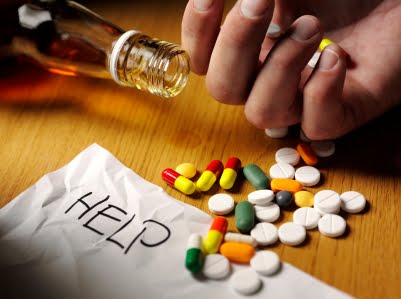
One main reason a lot of birth defects occur is from drug and alcohol consumption while the fetus is still developing. Many women still smoke, drink, and do other drugs while they’re pregnant with their child. The reason this can be a problem is because the fetus relies completely on the mother. Anything she consumes can be, and will be passed on to the child. As the child is developing, they can take in the toxins from cigarette smoke and alcoholic drinks.
Another problem with women eating poorly is the diet itself. Many pre-packaged, processed foods contain unnecessary fats, sugars, and unknown chemicals. Pretty much all modern pre-packaged foods are unhealthy, and can factor into birth defects.
I personally think women should treat pregnancy more seriously. You only have one chance to give birth and mother a child, so you might want to take it more seriously. Women should try to eat healthier and stay off alcohol and cigarettes, so that they can have a healthy child.

Wednesday, September 14, 2011

Latest Survey Proves Fewer Americans Are Smoking


A new survey has been done that shows that fewer adults in America are smoking. This survey includes legal cigarettes and cigars that can be bought at your local drug store, not illegal drugs. According to the US Center of Disease Control, 20.9 percent of Americans over the age of eighteen smoked tobacco in 2005, but only 19.3 percent are smoking in 2010. This sudden drop in 1.6 percent could have been caused by the awareness that smoking is unhealthy, over-the-counter nicotine patches, or a doctor recommendation… No matter what triggered the drop, it went down 1.6 percent in just five years! 

Smoking became popular a few decades ago when people didn’t realize the health risks. Now that people are realizing and seeing the effects of tobacco, they are quitting. Smoking damages your lungs, esophagus, and everything in between. It can damage your brain, heart, and vocal cords as well. I feel that smoking tobacco is a nasty act for your body and the environment. Smoking pollutes the air with harmful smoke and litters the ground with tiny pieces of paper leftover from smokers that are driving.

 I think it’s good that the 1.6 percent of Americans quit. It makes the United States of America look like a better, cleaner place. Smoking is the number one cause of lung cancer, which will also decrease America’s death rate from cancer. Many places, such as bowling allies, have eliminated the smoking area. If only restaurants would do the same, they could play a great role in making America drug free!

Tuesday, September 6, 2011

More Doctors, Nurses, Surgeons Needed In America

rich doctor with money
     A recent article put out by Yahoo News suggests that more doctors, nurses, and surgeons are needed in the United States. Even with the unemployment rates booming, many Americans are reluctant to go through medical schooling and the training necessary to become a doctor. Salaries for nurses can range up to $96,000 and salaries for doctors and surgeons can be up to $150,000. With the economy the way it is, why wouldn’t you jump ship and become a doctor? The answer is: it’s just not as easy as the government and universities put it.
      Medical school, four years of college, training, equipment, time… Lots of things go into wanting to become a doctor. I feel that universities and medical schools realize this hoping people give up. I feel that colleges like Florida State University sponsor programs in high schools, such as SSTRIDE, so more people can essentially go to FSU for free. What does this mean for Florida State? It looks good for them and it gets the college more students because of this program. I feel that these colleges are saying more medical jobs are needed, so younger students shoot for these high earning jobs.
      Is it that easy? Go through school, get the necessary training, and then get handed a job for $90,000? How many nurses do you know that have six-figure salaries? I feel that all universities and medical programs are doing is advertising… It takes a lot of work to become a doctor. It isn’t easy!

Facebook, MTV, and Other Teen Hotspots Are Causing More To Do Drugs, Alcohol

Written by Guest blogger - Ian- One-third of teenagers (male and female, ages 13-19) watch shows such as Teen Mom, Jersey Shore, and Gossip Girl. 70 percent of teens in the United States have an account on Facebook, MySpace, or another social networking website. According to researchers at the Columbia University National Center on Addiction and Substance Abuse, teens that are a part of MTV, Facebook, MySpace, or other social networking site are five times more likely to do drugs, smoke, or drink alcohol underage.

Facebook increases drug use & alcohol


Being a Facebook member myself, I feel that this statistic is ludicrous! Facebook doesn’t support, promote, or resemble drug and alcohol abuse in any way. Facebook and MySpace are about communication, sharing, and making friends. Social networks do not promote drugs in any way.

On the other hand, MTV does. The MTV ten years ago is totally different than the MTV now. They used to just play music video after music video, but they’ve turned into a teenage drama channel. Jersey Shore is about a bunch of steroid-pumped guys and anorexic girls partying. That’s all that show is about… And one third of American teenagers watch it! No wonder so many people are doing drugs, alcohol, and smoking.

The other thing that MTV promotes is pregnant teens. Instead of trying to prevent teenage pregnancy, they turned it into a show. The more teenage girls that get pregnant, the longer they can keep the show running. The longer the show stays running, the more money MTV makes. Parents, beware! The television is more dangerous than the Internet.

Thursday, June 2, 2011

Insurance companies profiting from Americans avoiding the hospital

It seems that Americans' use of doctors and clinics has dropped with the economy still at a low point, health insurers say, in a trend that keeps the companies' costs down and could bolster their profits further this year. This is crazy, so when we all don't have money the health insurance companies rake in the profit BUT still increase our monthly premiums.

Thanks to this health insurers are posting first-quarter profits well above analyst forecasts earlier this year.

The companies have been factoring increases into their pricing for their plans, but executives at an investor conference this week said utilization continued to stay low. Why.... so you make more money and decide to incresae premiums to make EVENR MORE MONEY.... Greedy!!

"Medical costs have not come back to trend levels we anticipated," UnitedHealth Group Inc, CEO Stephen Hemsley told the conference, held by Sanford Bernstein.

"But to date whether it's driven by economic trends or whatever, the medical costs continue to trend to be more moderate," Hemsley said...... Wow, this guy puts me to sleep with every word out of his mouth.... all I hear is blah, blah, blah......

Avoiding doctors

In the past, McCallister said, some (so just a hadnful??) health insurers have failed to anticipate a rebound in medical costs, and priced plans too low -- hurting results and investor confidence.
"The utilization is still relatively softer than we would have expected, no one knows when and if it is going to come back," McCallister said. "We're basically assuming that it's coming back because we're not going to miss that uptick."

Some analysts have suggested that the lower-than-expected utilization is a more fundamental change rather than a fleeting one. Due to structural changes in healthcare plans over the years, such as higher co-pays and other fees, consumers have steadily borne more of the healthcare costs.

"Typically, when people come back to work they then use health care services," Gellert said. "But in California if you're at 11.5 percent unemployment, I'm not sure that's the time you think about getting off your job and doing elective procedures."

I guess when you're having problems paying the mortgage getting botox or breast implants just don't seem that important.  I can understand why elective surgeries are down.

Wednesday, April 6, 2011

5 solutions to alarm fatigue in todays hospitals

When my wife had a baby the monitors kept not registering the baby's heartbeat and nobody seemed to care.  When they changed shifts and the new nurse came in to check the connections he instantly decided on an emergency C section.  This is a MAJOR problem.  This incident was a  perfect example of alarm fatigue. Was the equipment unreliable? Did nurses not have time to constantly adjust or readjust faulty equipment? How can we fix this problem?  Let me tell you 5 ways that can help:

1. Simpler monitors that are easier for even the patient to understand
Example - Fukuda Denshi Patient Monitors measure, record and display a patient’s vital signs, including heart rate, blood pressure and respiration. Patients most often wear simple measuring tools, such as blood pressure arm cuffs and oxygen finger clips, though the new system is also compatible with more invasive direct line equipment.

Even the colorful display screens are a help to staff, who report they can read data easily from the new monitors. The touch screen interface allows staff to quickly input or retrieve patient information. Since the system is networked, staff can check on a patient’s status from any of the monitors throughout the facility, from the operating room to the medical surgical wing to the emergency room. Respiratory department director Scott Briggs, CRT, says he appreciates that he can now keep track of patients throughout the hospital even while he works with individual patients in his office.

A network of remote transmitters and receivers allows patients to travel the entire length of the hospital with mobile monitors.


2. Create a secure phone app for the doctors and nurses
Imagine an iPhone app that allows nurses and doctors to see all of the patients info at a glance from anywhere they are.  They already have systems that integrate with the iPad or iPhone.  Create a custom app made just for hospitals to give every one access to anyone vitals at the touch of a button.


3. Create mobile based systems that begin reporting even when the ambulance is in transit
The Management of Fasmicro and Microscale Embedded are proud to announce that our Mobile-Based Integrated Heart Monitoring System will be ready by June 2011. This product will enable doctors and hospitals obtain heart beat or professionally ECG signals of patients remotely.  It will also monitor blood pressure, temperature and other medical data.


4. The use of wireless monitors to prevent cable disconnects:
In a paper written by Washinton University Departments titled: Reliable Clinical Monitoring using Wireless Sensor Networks: Experiences in a Step-down Hospital Unit, it revealed that the sensing reliability could be
significantly improved through oversampling and by implementing a disconnection alarm system that incurs minimal intervention cost. A retrospective data analysis indicated that the system provided sufficient temporal resolution to support the detection of clinical deterioration in three patients who suffered from significant clinical events including transfer to Intensive Care Units. These results indicate the feasibility and promise of using wireless sensor networks for continuous patient monitoring and clinical deterioration detection in general hospital units.

Collecting vital signs in general hospital units poses unique challenges that are poorly addressed by existing commercial telemetry systems. In contrast to cardiac or epilepsy care which require high data rate EKG, EEG, or acceleration measurements, the collection of vital signs1 requires low data rates.

In spite of the numerous patient monitoring systems that have been developed, they are seldom evaluated with real users and real-world deployment. The evaluation of most systems does not focus on reliability and is usually performed in laboratories rather than in healthcare environments. However, there are a few notable exceptions. The MEDiSN and SMART projects focus on monitoring patients waiting in emergency rooms.


5.  Reduce False Alarms
I think this is the biggest of all of them.  As stated in the medical article "Monitor Alarm Fatigue: Standardizing Use of Physiological Monitors and Decreasing Nuisance Alarms" the sheer number of false alarms desensitizes the staff to any alarm. Cardiac monitor algorithms are intentionally set for high sensitivity at the expense of specificity. As a result, numerous false alarms occur.

A 2006 American College of Clinical Engineering survey of more than 1300 health care professionals showed that a large percentage of respondents believed that what are commonly called “nuisance” alarms occur frequently (81%), disrupt patient care (77%), and can reduce trust in alarms, causing clinicians to disable them (78%). In other studies, researchers have reported a high percentage (86%–99.4%) of false-positive alarms produced by physiological monitors, stating that alarms result in a change in the management of the patient less than 1% of the time.

Nurses in intensive care units stated that the primary problem with alarms is that they are continuously going off and that the largest contributor to the number of false alarms in intensive care units is the pulse oximetry alarm. “Smart alarms,” which analyze multiple parameter changes in a patient’s condition, may be a solution, but not all monitors currently in use have such features.

false medical alarm
False flatline Medical Alarm

If you want to learn more about the background of alarm fatigue click here at "A Patriotic Nurse".